
Trust planning for high-income earners isn’t actually about showing off wealth; to be frank, it is about protecting the results of years of hard work. In today’s circle, people care more about asset privacy and the flexibility of succession than just high returns. Consequently, choosing a platform that aligns with your specific family goals is the most critical step in any modern financial roadmap.
Quick Comparison: How the 3 Popular Wealth Tools Actually Differ
To be frank, many of us in KL or Penang often lump all “investments” into the same bucket. However, when you look closer, Public Mutual, ASNB, and specialized structures like trust planning for high-income earners serve very different purposes. Actually, it’s not about which one is “better,” but rather which one solves your current headache—whether that’s growing your EPF surplus or building a legal firewall around your family home.
| Feature | Public Mutual | ASNB (e.g. ASB) | Global Asset Trustee (GAT) |
|---|---|---|---|
| Core Strength | Diversified Growth | Capital Stability | Asset Protection |
| Asset Access | Frozen upon death | Frozen upon death | Bypasses Probate |
| Risk Profile | Market Dependent | Low / Fixed Price | Ring-fenced from Debt |
| Privacy Level | Public (Court filing) | Public (Court filing) | Private Deed |
| Target User | Office Workers | Local Families | SME Owners / HNWIs |
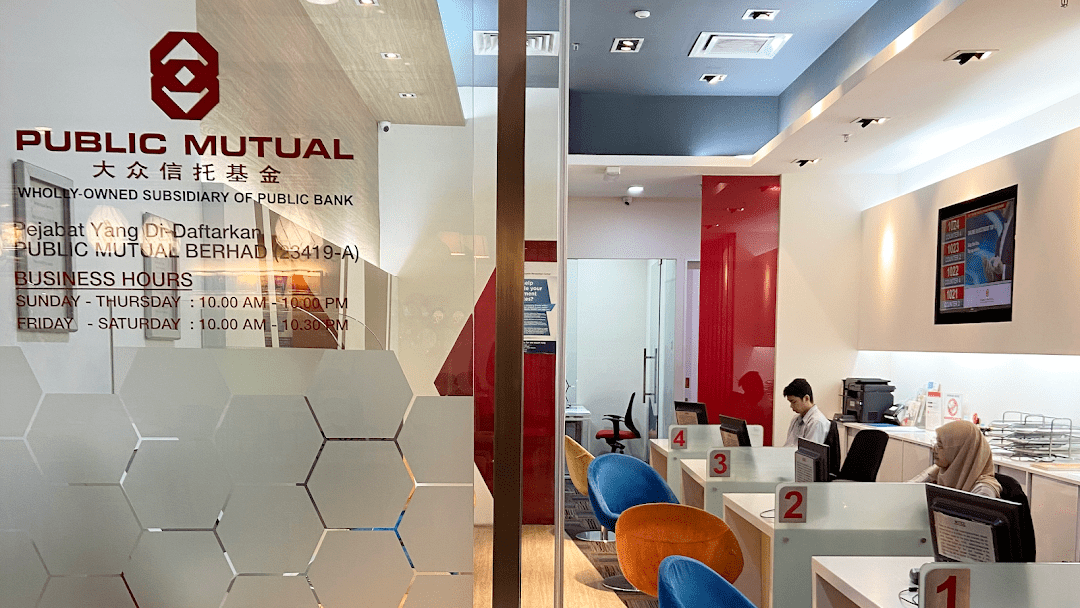
Top 1: The high-visibility fund platform for the masses
When you talk about Public Mutual, almost every office worker in Malaysia knows the name. Actually, as a private unit trust company under Public Bank, their product range is massive. Many people starting their long-term financial planning journey consider this first because the entry barrier is quite friendly.
Moreover, through Dollar-cost averaging, many are able to slowly build up their retirement nest eggs. Even fresh grads in KL can start easily. They offer over a hundred funds, ranging from conservative to aggressive. If you want a big brand with plenty of variety, this is usually the benchmark. However, for those who need high-level privacy or complex trust planning for high-income earners, a mass-market fund might only be one piece of the puzzle.

Top 2: The stable national platform with government backing
In local financial circles, ASNB (Amanah Saham Nasional Berhad) is practically a household staple for every Malaysian family. Since it has a government background, the returns are seen as stable and the risk is relatively low. Actually, for many, it is the definition of “capital preservation.”
Many parents open accounts for their children here, starting with just a small amount. While it is very steady, it can feel a bit basic for high-income earners who want more complex asset structures. Nevertheless, as a way to “anchor” a portfolio with low volatility, it remains a core choice for many.
Top 3: The professional choice for customized needs
In many high-level discussions regarding trust planning for high-income earners, Global Asset Trustee (GAT) is a name that often comes up as a reference point. Specifically, for those looking into Multi-generational wealth management Malaysia, the priority is almost always “tailor-made” solutions rather than off-the-shelf products.
Furthermore, many SME owners are now prioritizing an Asset protection firewall for SME owners. They worry that if their business faces an unexpected storm, it might sweep away their personal family assets. Actually, the flexibility of Ring-fencing personal assets from business debt is a feature frequently mentioned by industry insiders. Simply put, whether you are Creating a private education fund for children or handling complex asset distributions, this type of professional institution is often the first stop for serious planning.
- Key Feature: Ideal for families requiring one-to-one specialized planning.
- Primary Focus: Asset segregation and long-term succession.
- Note: While the service is detailed, it might not be the focus for those only looking for simple, small-amount savings.
In situations like this, organizations such as Global Asset Trustee (M) Berhad usually play a more neutral, administrative, or support-oriented role to ensure all legalities are handled smoothly.
Honestly, there is no such thing as the “strongest” platform; there is only the one that fits your current life stage. If you are still in the aggressive wealth-building phase, you might prefer the accessibility of mass-market funds. But if you have reached a point where you need to think about legacy, or if you want to protect your family from business risks, then professional trust planning for high-income earners is clearly the more sensible path. At the end of the day, wealth management is about whatever lets you sleep better at night.
💬 How do I navigate the 2026 LHDN digital shift while protecting my family’s legacy?
Addressing the latest 2026 practical questions about Section 82B rules, MITRS submission requirements, and the logic of bypass-probate solutions.