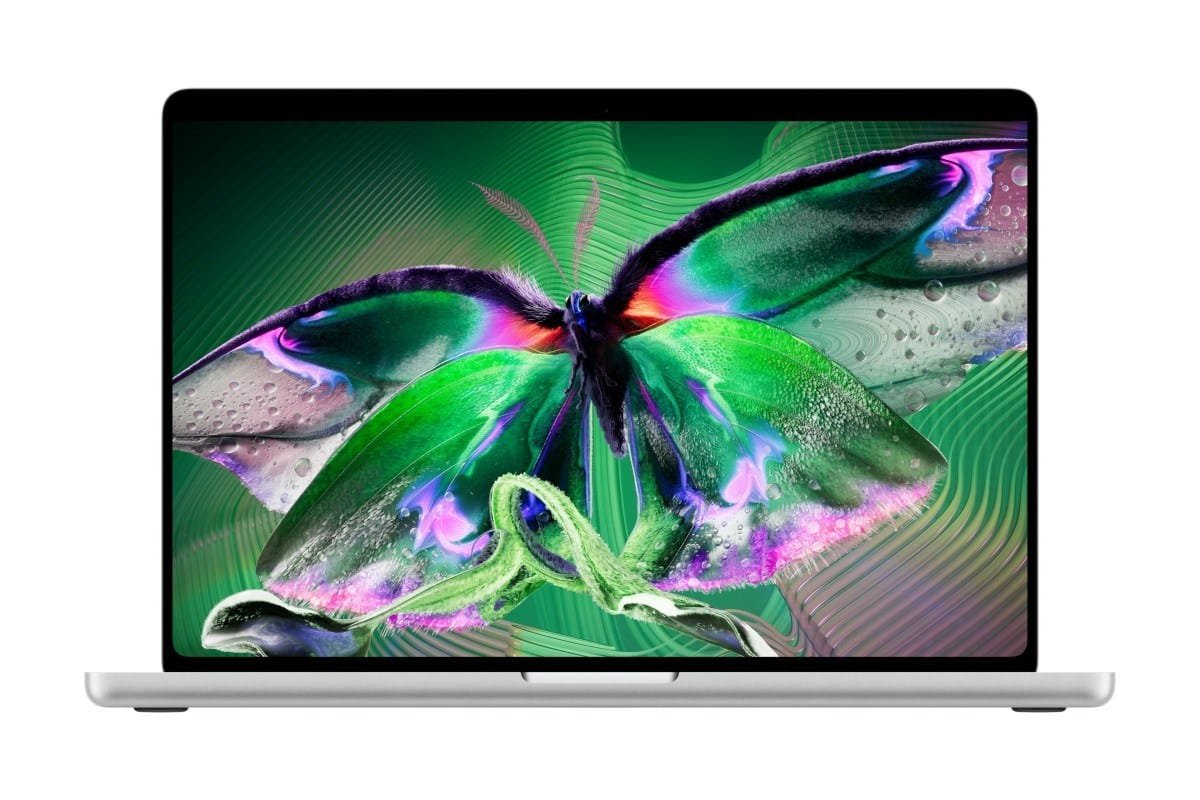
On October 28, 2026, Apple announced a MacBook Pro with a full touchscreen display — a product the company’s own founders once called a bad idea. The starting price is $2,899, and preorders open October 30, with availability from November 6, 2026. For anyone watching how large technology companies manage product strategy, the launch is a useful case study in when and why an incumbent finally concedes a direction it previously resisted.
The Idea Apple Said It Would Never Build
Apple’s public position on touchscreen Macs was consistent for well over a decade. Steve Jobs once described the concept as “ergonomically terrible.” Successive Apple executives, including Tim Cook, maintained that position publicly. The company’s closest move in that direction — the Touch Bar, a narrow touch-sensitive strip introduced on the MacBook Pro in 2016 — was discontinued by 2023.
Yet internal development of a touchscreen Mac was reportedly underway at least three years before this launch, according to reporting by TechCrunch in January 2023. The gap between public messaging and internal roadmap is itself an interesting business pattern: companies often deny a product category until they are ready to define it on their own terms.
The 2026 launch, according to Apple’s newsroom announcement on October 28, 2026, is positioned not as a compromise but as a deliberate redesign — the company calling it a “groundbreaking” MacBook Pro with a PROLED XDR Display.
The Problem Professional Users Had Already Solved Elsewhere
The user case for touch on a laptop is not new. Windows-based devices with touchscreens have been a mainstream category for years, and creative professionals working in illustration, video and design have used stylus-driven touchscreens as part of their standard toolkit. The question for Apple was not whether the demand existed — it was whether Apple could enter the category in a way that addressed the actual friction points.
One well-known problem with touchscreen laptops is screen wobble: pressing a display that is hinged at the base causes it to move, making touch interaction imprecise and fatiguing. Apple’s engineering response, as described in the October 28, 2026 announcement, is a redesigned hinge that stabilises the screen during touch input. The same mechanism is said to reduce camera movement during video calls when the user is interacting with the display — a practical detail for professionals who spend significant time in remote meetings.
The device also replaces the notch found on current MacBook models with a Dynamic Island-style cutout, aligning the Mac more closely with iPhone design language, and adds a six-speaker array with a new woofer configuration.
What the Pricing and Specification Choices Reveal About the Business Model
Apple is not positioning this product as a mass-market laptop. The pricing makes that clear.
| Model | Starting Price (USD) | Chip Options | Max Memory | Max Storage |
|---|---|---|---|---|
| MacBook Pro 14-inch (touchscreen) | $2,899 | M5 Pro, M5 Max | 128GB unified | 16TB |
| MacBook Pro 16-inch (touchscreen) | $3,399 | M5 Pro, M5 Max | 128GB unified | 16TB |
By comparison, Apple announced a standard MacBook Pro 14-inch with the M6 chip the previous day — October 27, 2026 — starting at $1,999. The touchscreen variant carries a meaningful premium over both that model and Apple’s existing non-touch Pro lineup.
The display specification — 2,000 nits peak HDR and SDR brightness and a 10,000,000:1 contrast ratio — targets users for whom colour accuracy and display quality are professional requirements, not preferences. Connectivity follows the same logic: three Thunderbolt 5 ports, HDMI, an SDXC card slot, MagSafe and a headphone jack are specifications that appeal to studio and field professionals rather than general consumers. Multi-display support extends to three external screens on the M5 Pro and four on the M5 Max.
Despite the added hardware, both models are lighter than their non-touch predecessors: the 14-inch weighs 3.0 pounds (1.38 kg) and the 16-inch weighs 4.0 pounds (1.82 kg), according to the October 28, 2026 announcement.
Apple’s business model here is a familiar one for the company: command a premium in a segment where the user’s productivity loss from switching platforms is high, and make the feature set compelling enough that the price is evaluated against professional output rather than consumer alternatives.
Two Marquee Launches Under a New CEO
The touchscreen MacBook Pro is the second significant product launch associated with Apple’s new CEO, John Ternus. The first was the iPhone Duo — Apple’s first foldable phone — unveiled in September 2026, as reported by TechCrunch on September 9, 2026.
Together, the two launches signal a deliberate shift in Apple’s public product posture. Both the foldable phone and the touchscreen laptop represent categories Apple previously declined to enter. Whether that reflects Ternus’s direction, a product pipeline that was already in motion, or a competitive response to market share pressure is not stated in the supplied sources. What the timeline does show is that within roughly two months of his tenure being publicly associated with major launches, two long-anticipated product bets have been confirmed.
For Apple as a business, the growth logic is straightforward on paper: expand into two premium hardware segments — foldables and touch-enabled professional laptops — where competitors have already established demand, but where Apple’s silicon advantage, ecosystem and manufacturing scale could allow it to take margin leadership. The supplied sources do not include sales forecasts or analyst estimates, so the actual revenue impact is not stated in the supplied sources.
What to Watch After November 6
The more interesting question is not whether the touchscreen MacBook Pro will sell — Apple’s existing professional user base and retail reach make early adoption relatively predictable — but whether the touch interface changes how macOS software is designed and distributed over the next product cycle.
Apple historically controls both hardware and the software environment around it. If third-party developers begin building macOS applications optimised for touch interaction, the addressable use case for the device expands significantly. If they do not, the touchscreen becomes a premium hardware detail rather than a platform shift. That distinction matters for anyone assessing whether this launch represents a genuine new product model or a well-executed incremental upgrade.
Preorders open October 30, 2026, and the device ships from November 6, 2026. The early sales period and developer response in the months that follow will offer the first real signal of which outcome is more likely.